
The Avatar Movie Trilogy: A Visual Revolution That Redefined Blockbusters
12/22/20252 min read
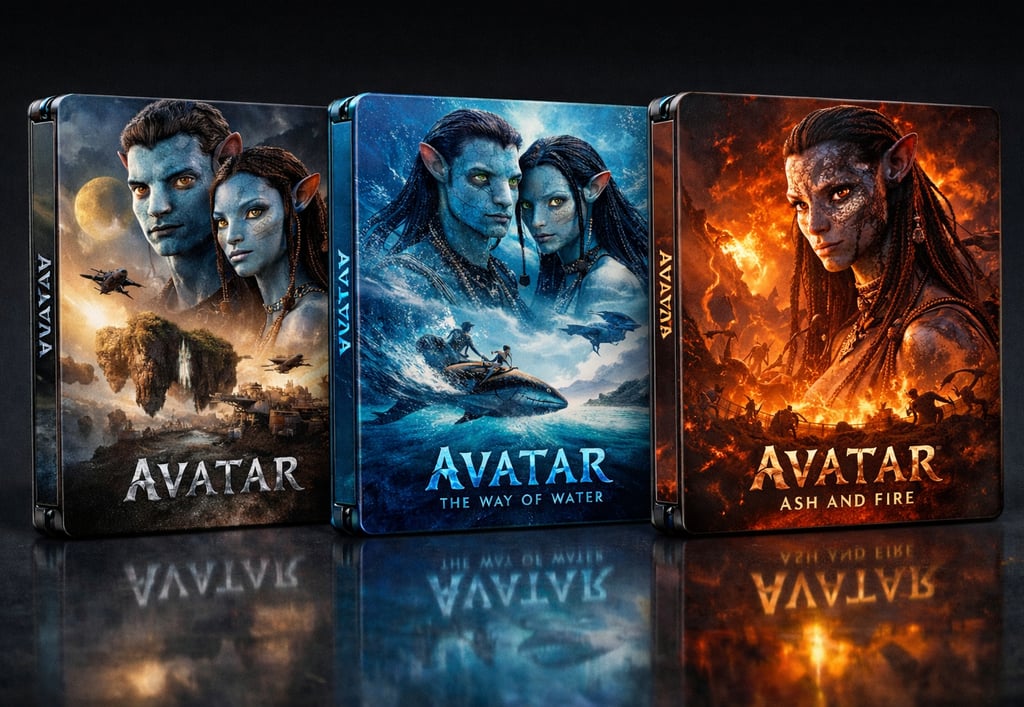
When Avatar first arrived in 2009, it didn’t just break box office records — it rewired what audiences expected from blockbuster cinema. James Cameron didn’t aim to make “just another sci-fi movie.” He set out to build an entire living, breathing world. Over the course of the Avatar trilogy, that ambition has only grown, turning Pandora into one of the most visually rich and immersive universes ever put on screen.
Avatar (2009): The Birth of Pandora
The original Avatar introduced us to Pandora, a moon bursting with bioluminescent jungles, floating mountains, and the Na’vi — a culture deeply connected to nature. While the story followed a familiar arc of colonialism and redemption, the execution was anything but familiar.
Cameron’s groundbreaking use of performance capture and 3D technology set a new industry standard. For many viewers, Avatar wasn’t just watched — it was experienced. Even years later, its visual clarity and scale still hold up, especially in high-definition and collector formats like steelbooks.
Avatar: The Way of Water (2022): Expanding the World
More than a decade later, The Way of Water proved that Pandora still had plenty to offer. Shifting the focus from forests to oceans, the sequel dove into underwater ecosystems that felt impossibly real. The water physics alone were a technical marvel, pushing visual effects further than most films dare to attempt.
But beyond the visuals, the sequel leaned harder into family, legacy, and survival. Jake Sully’s journey evolved from outsider-turned-leader to father protecting his children, giving the franchise more emotional depth than many expected.
Avatar: Ash and Fire: A Darker Turn
The third chapter, Avatar: Ash and Fire, promises to take the saga in a more intense direction. Early hints suggest a harsher environment, morally complex Na’vi clans, and themes that challenge the black-and-white worldview of earlier films.
Visually, the contrast of fire, ash, and volcanic landscapes stands in stark opposition to the blues and greens that defined the first two films. For fans and collectors, this evolution makes the trilogy feel deliberately designed — each chapter representing a different elemental force of Pandora.
Why Avatar Endures
What sets the Avatar trilogy apart isn’t just spectacle. It’s commitment. Cameron treats world-building as sacred, technology as a tool (not a crutch), and theatrical viewing as something worth protecting.
In an era dominated by fast franchises and disposable content, Avatar moves slowly, intentionally, and confidently. Each film feels like an event — something meant to be revisited, collected, and admired.
A Collector’s Dream
From a collector’s standpoint, Avatar is perfect steelbook material. Bold color palettes, iconic imagery, and elemental themes translate beautifully into premium physical editions. Lined up together, the trilogy doesn’t just represent movies — it represents the evolution of modern cinema.
As the saga continues, one thing is clear: Avatar isn’t finished redefining what’s possible on screen.