
Star Wars: The Clone Wars (2008)
1/15/20262 min read
Star Wars: The Clone Wars (2008) — The Series That Made the Galaxy Feel Alive
When Star Wars: The Clone Wars premiered in 2008, it arrived with a strange burden: bridge two films people loved (Attack of the Clones and Revenge of the Sith), deepen a war we only glimpsed on screen, and do it all in animated form. Expectations were cautious. What followed was one of the most ambitious—and emotionally resonant—chapitolations in the entire Star Wars saga.
Over seven seasons, The Clone Wars didn’t just fill in gaps. It reframed the era. The series transformed faceless clone troopers into individuals with names, fears, loyalties, and humor. It took a once-stiff Anakin Skywalker and gave him warmth, swagger, and tragic depth. And it introduced Ahsoka Tano—now one of the franchise’s most beloved characters—who became the heart of the show.
A War With Consequences
What makes The Clone Wars special is its willingness to sit in the discomfort of war. This isn’t just blaster fire and lightsabers. It’s politics, propaganda, moral compromise, and the slow erosion of ideals. Episodes explore:
The ethics of creating soldiers bred only to die
Corruption within the Republic
The cost of command on Jedi who were never meant to be generals
Arcs like the Umbara campaign or Fives’ investigation into the inhibitor chips hit with the weight of real tragedy. You know where the story ends—but the series makes the how devastating.
Anakin, Rewritten
For many fans, The Clone Wars retroactively improves the prequel trilogy. Anakin becomes charismatic, loyal, and genuinely heroic. His bond with Ahsoka shows us the mentor he could be—and the man he might have remained. When the darkness finally claims him in Revenge of the Sith, it hurts more because the series showed us what was lost.
This is Star Wars at its most operatic: destiny colliding with choice.
A Visual Identity All Its Own
The show’s evolving animation style deserves praise. Early episodes are rough around the edges, but by later seasons, the series achieves cinematic scale—stormy skies, burning cities, neon-lit underworlds, and haunting quiet moments in empty hangars. The final season, in particular, feels like a prestige miniseries, blending film-quality visuals with tragic inevitability.
Kevin Kiner’s score ties it all together, echoing John Williams while carving out its own emotional language. By the time the final episodes align with Order 66, the music alone can break you.
Legacy in the Modern Era
The Clone Wars isn’t just a great Star Wars show—it’s a foundation for the modern canon. Rebels, The Bad Batch, Ahsoka, and even The Mandalorian are all shaped by its characters and themes. It taught Lucasfilm that animated storytelling could carry as much weight as live-action films.
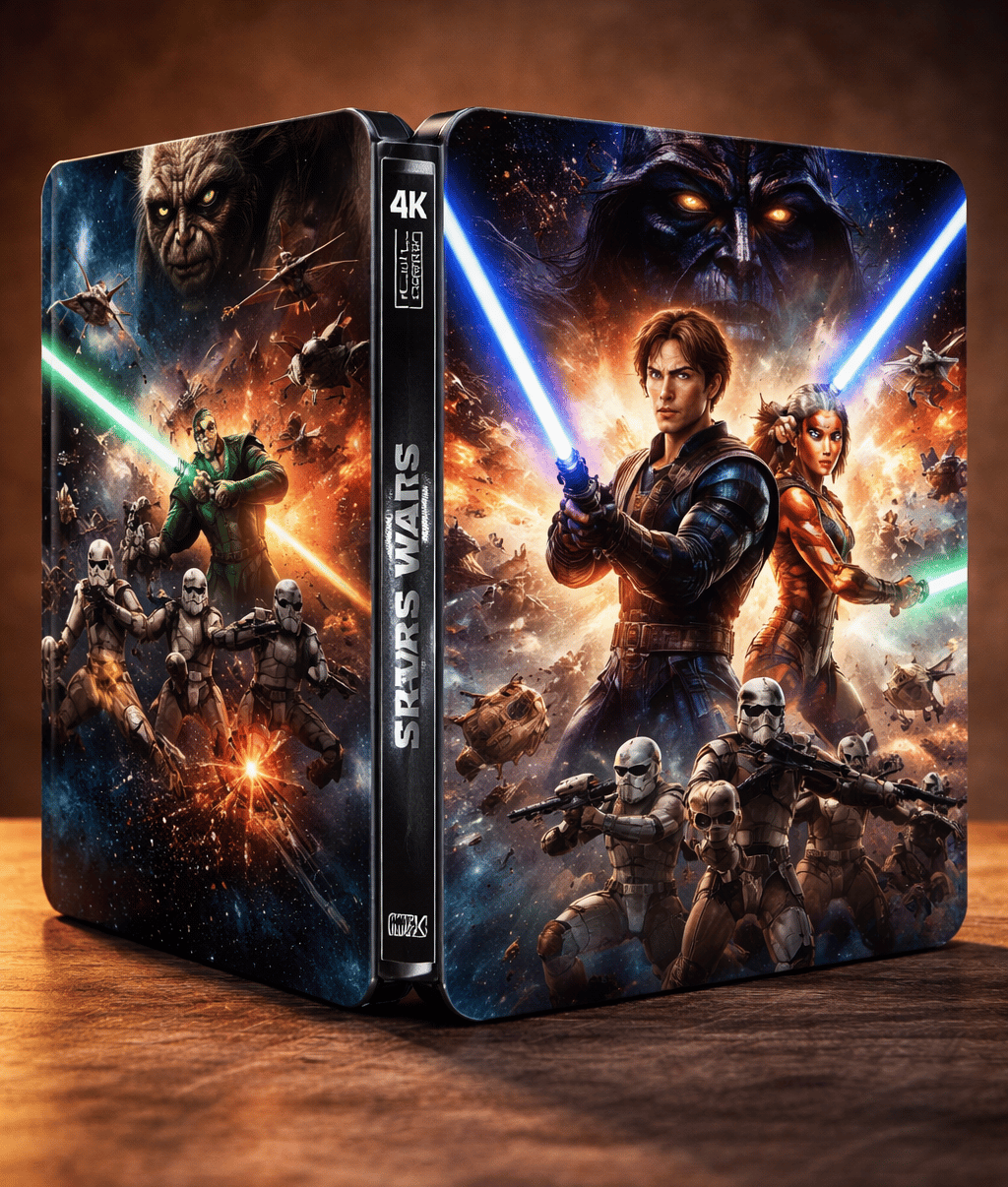
For collectors, this series feels like it deserves something tangible—something as iconic as the stories themselves.
A custom steelbook for The Clone Wars should feel like the war in motion: clone helmets cracked and scarred, Ahsoka’s silhouette against a burning sky, Anakin’s shadow stretching just a little too long. It’s a series about identity, loyalty, and fate—and it belongs in a case that feels legendary.
Because The Clone Wars didn’t just expand Star Wars.
It gave the galaxy a soul.